Beacon Hills Police Station
Holding Out for a Hero ▸ Stiles Stilinski (2)Beacon Hills Police Station functions as the town’s institutional center for investigation and custody, but its apparent order is repeatedly overwhelmed by the supernatural conflicts surrounding Beacon Hills. The station’s ordinary procedures—desk reception, surveillance review, evidence files, holding rooms, and handcuffs—remain present throughout these crises, yet they are constantly repurposed by teenagers, werewolves, hunters, and suspects acting outside normal legal authority.
Definition and Setting
Beacon Hills Police Station is presented as a functioning law-enforcement facility with a front desk, corridors, holding rooms, surveillance equipment, files, and an established staff. During one late-night visit, the station is almost empty except for a girl working the desk; the hour is two in the morning, and the former sheriff leads Carson Bradley, Stiles Stilinski, and Scott McCall toward the back offices. The scene links the building to both routine administration and the unresolved consequences of earlier violence, since Carson recognizes the desk worker from an earlier attempt to stop a man from killing Isaac Lahey.
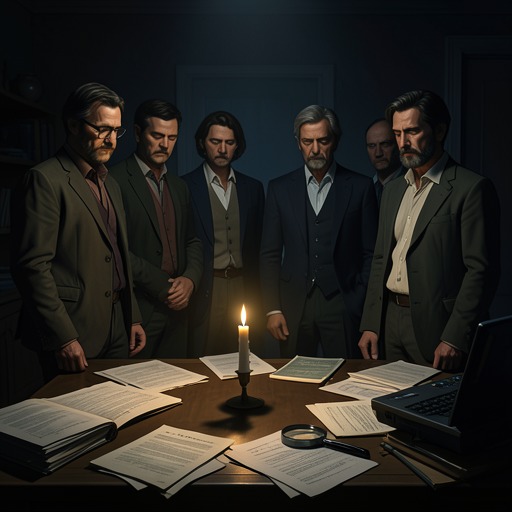
The station also contains the former sheriff’s old desk, which becomes an improvised investigative center. There, Carson, Stiles Stilinski, Scott McCall, and Stiles Stilinski’s father examine hospital surveillance from the night Jessica was murdered. The footage is difficult to search because a six-car pileup had filled the hospital with patients, wheelchairs, and gurneys, turning the station’s evidence work into a struggle against volume, confusion, and incomplete visibility.
Investigation and Evidence
The police station provides the material infrastructure for tracing Matt Daehler’s movements. Investigators search surveillance footage for his passage through the hospital on the night Jessica was murdered, while files connect physical evidence from multiple crime scenes. Shoeprints beside tire tracks at the trailer park are compared with other evidence, potentially placing Matt Daehler at the trailer, the hospital, and the rave. A credit-card receipt signed by Matt Daehler at the mechanics garage suggests a fourth connection, linking the station’s paperwork to the killing of the auto mechanic.
This evidence gives the station a double function. It is a place where official records can expose a pattern, but it is also a place where the pattern remains vulnerable to gaps in surveillance and the difficulty of interpreting material traces. The investigators do not possess a single decisive image; they assemble a case from crowded hospital footage, shoeprints, tire tracks, and a receipt. The station therefore turns physical remnants into narrative pressure: each new document narrows the distance between suspicion and accusation.
Detention and Legal Exception
The station’s authority is repeatedly displaced by improvised detention. Carson Bradley and Stiles Stilinski steal a police vehicle to keep Jackson Whittemore from hurting anyone, while Jackson Whittemore lies unconscious inside the van after Scott McCall has repeatedly struck him to restrain him. The stolen vehicle extends the station’s custodial function beyond its walls, showing how the characters adopt police powers without formal authorization because they believe ordinary containment is insufficient.
A separate school-related intervention also demonstrates the station’s connection to punitive authority. Gerard Argent, newly concerned with supporting his teachers on his first day, announces that at least two students must take the fall and remain behind for detention. Although the detention itself is not located in the station, the moment reflects the same expansion of disciplinary power that surrounds the police building: authority is treated as something that can be seized, redirected, or imposed during a period of institutional instability.
Hostage Crisis and Collapse of Order
The station becomes the setting for a hostage situation in which Matt Daehler forces Carson Bradley down a hallway with a gun pressed into her back. He intends to take four people hostage and is willing to let Jackson Whittemore kill others in order to accomplish it. The building’s normal promise of protection is inverted; its corridors become a route of coercion, and the person under arresting pressure is not moved toward safety but compelled deeper into danger.
The crisis escalates when the entire station is thrown into chaos. The lights go out, alarms begin squawking, and rapid gunfire fills the building. Carson Bradley identifies the gunfire as coming from the Argents rather than Matt Daehler, adding a second armed force to the confrontation. The station consequently contains several overlapping threats at once: the Kanima, Matt Daehler with a gun, Scott McCall and another werewolf, and the hunters. The emergency is not a clean contest between law and criminality; it is a collision among incompatible forms of supernatural, personal, and institutional power.
Inside the holding room, Carson Bradley attempts to unpick the handcuff securing Stiles Stilinski’s father while intermittent yellow light briefly restores visibility. She is standing over him in the darkness, working with a pin as alarms and gunfire continue outside, while Melissa McCall cheers her name from inside the cell to keep the tension from overwhelming her. The handcuff becomes a sharply concrete emblem of the station’s reversal: a device meant to enforce custody now traps an ally, and escape depends on a small improvised tool rather than official procedure.
Narrative Significance
Beacon Hills Police Station is a threshold between ordinary civic life and the concealed supernatural world. Its surveillance footage, case folders, and forensic clues represent the possibility of rational investigation, while its darkened corridors, holding rooms, stolen vehicles, and armed invasions reveal how quickly that rational order can fail. The station repeatedly converts public authority into a contested resource: suspects seize police vehicles, civilians conduct unauthorized investigations, hunters enter with assault weapons, and handcuffs become obstacles to rescue.
Its recurring importance lies in this contrast between institutional form and practical breakdown. The building is never merely a backdrop for police work. It is where evidence is gathered, identities are inferred, bodies are restrained, and authority is tested under pressure. By placing supernatural conflict inside a recognizable legal setting, the narrative makes the limits of official protection visible: the station can preserve records and provide a structure for inquiry, but during the hostage crisis its most important acts of survival come from improvisation, cooperation, and resistance carried out within the ruins of normal procedure.